

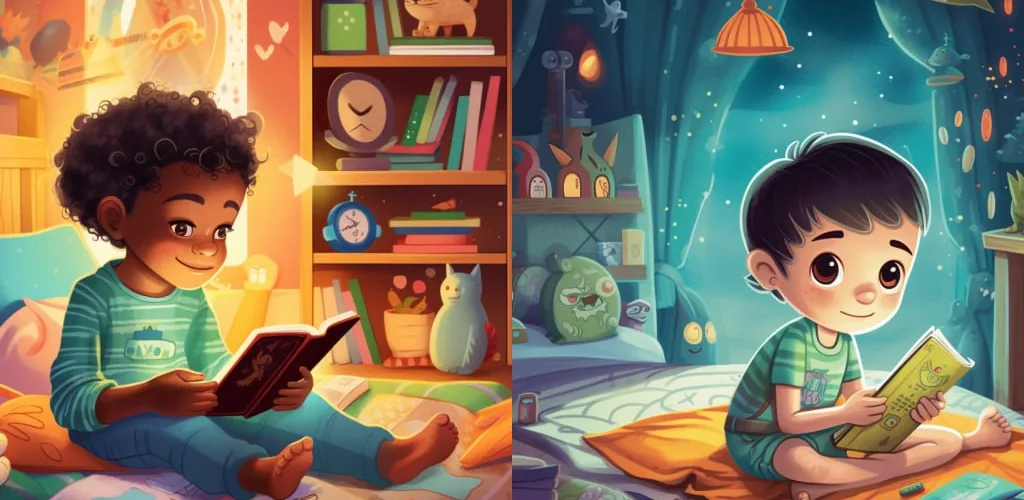
What makes 4-year-olds different listeners
At four, kids sit right at the crossing point between toddler and big kid. They can hold a simple three-part plot in their heads — a hero, a small problem, a happy fix — but they still think magically: the moon really does follow the car, and a talking fox is entirely plausible. That mix is why fantasy lands so well at this age, and why stories that are about them land even better.
Four-year-olds also love repetition far more than adults do. Hearing the same story (or the same story shape) again and again isn't boring to them — it's how they build vocabulary, learn to predict what comes next, and feel safe. If your child asks for "the dragon one" for the ninth night in a row, that's not a rut. That's learning.
One more thing changes around this age: imagination gets strong enough to produce real fears — the dark, monsters under the bed, being separated from you. A good bedtime story can gently work with those feelings instead of ignoring them.
The right length: about 5 to 10 minutes
Most 4-year-olds do best with a story that takes five to ten minutes to read aloud — roughly 500 to 900 words. Shorter than that and they'll demand "another one!"; much longer and you'll lose them (or worse, wind them up right when you want them winding down).
On rough nights — late dinner, skipped nap, meltdown at bath time — go shorter, not longer. A calm 5-minute story told with a slow voice beats a 20-minute epic every time. Save the longer adventures for weekend nights when nobody's watching the clock.
Themes that work at four (and what to avoid)
Themes that reliably work for this age:
- Friendly animals with one small problem. A bunny who lost a slipper. A dragon who can't whistle. Low stakes, warm resolution.
- Everyday adventures made magical. The trip to the bakery, but the bread sings. Four-year-olds love seeing their own world with one impossible twist.
- Being brave in a small way. Trying the big slide, sleeping with the light off, saying hi to a new friend. Stories rehearse courage safely.
- Helping someone. At four, kids glow when the hero — especially a hero with their name — is the one who helps.
What to avoid right before sleep: villains who chase, anything with real peril, cliffhangers, and stories that end in a big exciting celebration. Excitement is wonderful at 4pm and counterproductive at 8pm. Aim for stories that get quieter as they go, ending with the hero safe, cozy, and sleepy.
Three story openers you can steal tonight
Stuck at "once upon a time"? Start with one of these and let your child fill in details as you go:
"Once there was a child named [your child's name] who found a tiny door behind the toy box — a door exactly the size of a shoe. Tonight, for the very first time, the door was glowing…"
"In the softest corner of the forest lived a bear called Humbert who collected sounds in jars. He had rain in one jar and giggles in another. But his favorite jar was empty, because the sound he wanted most was very, very hard to catch…"
"[Your child's name] pressed the button on the cardboard rocket, just pretending — but the rocket rumbled, the ceiling opened like a flower, and up they floated, past the streetlights, past the clouds, to where the sleepy stars were just turning on their nightlights…"
Notice the pattern: a familiar hero, a gentle wonder, no danger. From an opener like that, you can improvise five minutes easily — your child will happily supply the rest ("and THEN a dinosaur comes!").
Make your child the hero
If there's one trick that transforms bedtime at this age, it's this: put your child in the story by name. Four-year-olds are gloriously egocentric — in the healthy, developmental sense — and a story where they're the named hero holds their attention like nothing else. It also does quiet emotional work: the child who hears "and Maya was brave, even though the cave was dark" is rehearsing her own bravery.
You can do this with any made-up story. If you'd rather not improvise every night, this is exactly what our app was built for: your child picks the world and the characters with big friendly buttons — dragons or robots, forest or outer space — and the AI writes a calm, age-appropriate story starring them, in seconds. The first story is free, so you can see whether your four-year-old lights up the way ours did.
Fold the story into a steady routine
A story works best as the anchor of a predictable wind-down: bath, teeth, pajamas, dim lights, story, song or cuddle, lights out — in the same order, at roughly the same time, every night. Four-year-olds are world-class negotiators ("ONE more story!"), and a consistent routine is your best defense: the routine, not you, is the boss. If bedtime at your house has gone sideways, our guide to a bedtime routine for toddlers covers the full evening sequence, and much of it still applies at four.
Two small tips that punch above their weight: agree on the number of stories before you start ("two tonight — you pick both"), and slow your reading voice for the last page or two. Your pace sets their heartbeat.